
Paver Walkways
Enhance Your Landscape with Expert Paver Walkway Installation Services
Walkways and paths face relentless punishment from Michigan winters—freeze-thaw cycles heave pavers out of alignment, ice expansion cracks rigid materials, and road salt deteriorates surfaces not selected for chemical exposure. Elite Landscapes installs pedestrian paths across Eaton Rapids and the Lansing area using materials and edge restraint systems designed specifically to withstand the ground movement and surface abuse that define mid-Michigan winter conditions. Your walkway remains level and intact through multiple seasons because the material selection and installation method account for the forces working against it from the first freeze.
Material choice determines whether a path lasts decades or requires replacement within five years. Concrete cracks when freeze-thaw cycles exceed its flex tolerance, thin pavers without proper base support shift vertically during frost heave, and materials not rated for salt exposure deteriorate at the surface where deicing contact occurs most. Installation includes edge restraint that prevents lateral creep and base preparation that handles the same ground movement challenges that affect patio construction.
Request an on-site evaluation to assess path routing, existing drainage patterns, and material options suited to your specific use and exposure conditions.
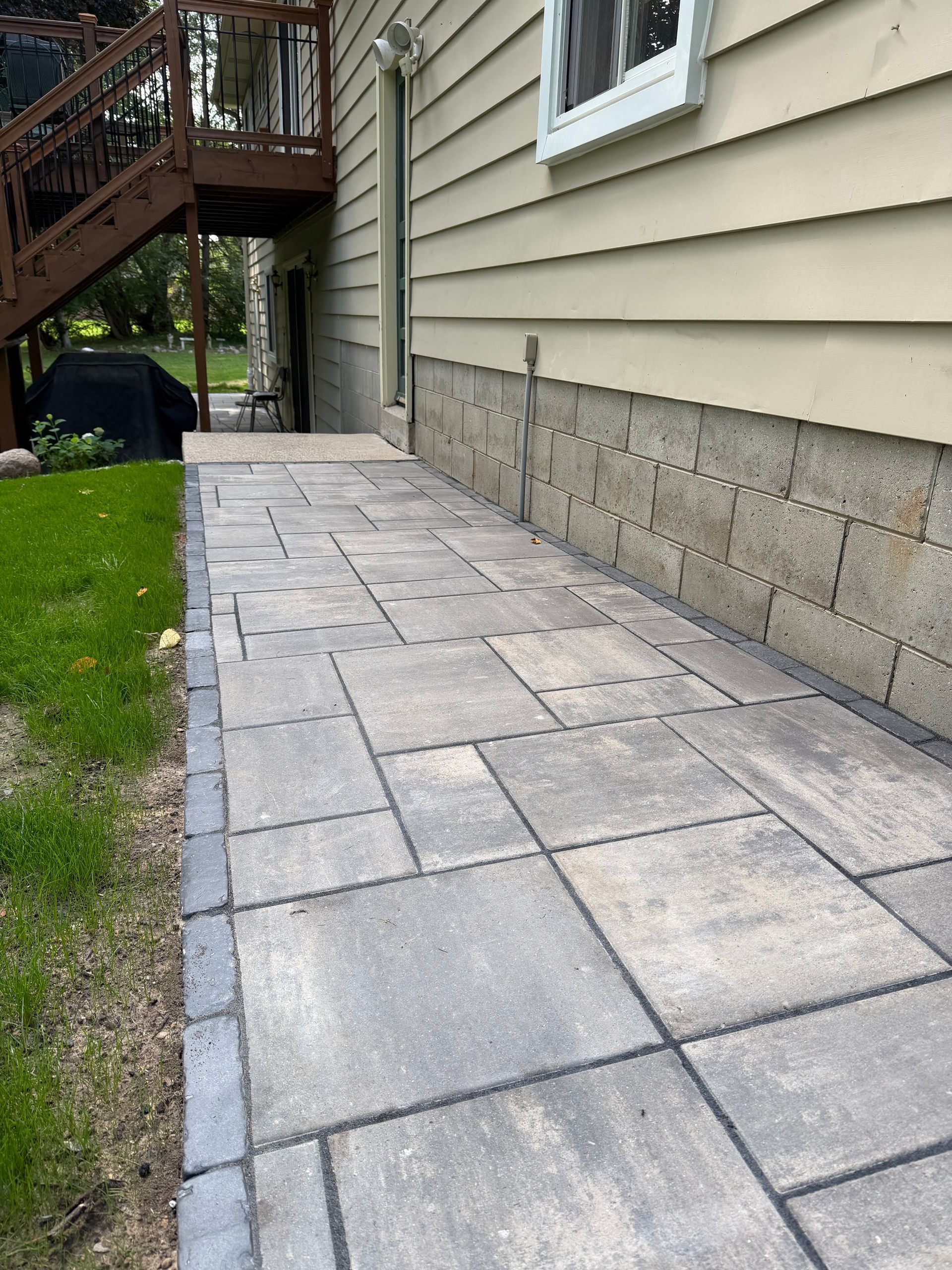
What Proper Installation Requires
Edge restraint prevents the gradual spreading that occurs when freeze-thaw cycles push path materials outward and nothing holds them in place. Elite Landscapes installs commercial-grade edge systems that anchor into the base layer and contain the path surface against lateral movement. Base preparation follows the same compaction standards used for larger paver installations—excavation below frost penetration depth, aggregate placed in lifts and mechanically compacted, and drainage fabric to prevent base contamination from subgrade soil migration.
After installation, the path surface stays flush with adjacent lawn rather than developing the raised edges or sunken centers that indicate base failure. Joints between pavers remain tight without the progressive widening that leads to weed growth and tripping hazards. Winter deicing doesn't leave surface pitting or spalling because material selection accounted for salt exposure from the beginning.
Path width, expected traffic load, and exposure to vehicle crossings all affect material selection and base depth requirements. Downtown Eaton Rapids and Island Park area properties often involve routing decisions that balance aesthetics with the practical need to handle snow removal equipment and pedestrian traffic on icy mornings.
What Property Owners Usually Ask
Walkway and path projects generate specific questions about material durability and installation methods that prevent the common failure modes seen in Michigan climates.
What materials hold up best in Eaton Rapids winters?
Pavers designed for freeze-thaw durability and manufactured with low water absorption rates resist the expansion forces that crack concrete and natural stone, and surface treatments rated for deicing salt exposure prevent the scaling that destroys unprotected materials within a few seasons.
Why do walkways heave or sink after installation?
Without proper base depth and compaction, frost penetration lifts sections during freezing and leaves voids when thawing occurs, creating the progressive displacement that turns a level path into a tripping hazard within two to three freeze-thaw cycles.
How does edge restraint prevent path failure?
Edge restraint anchors the perimeter and prevents the outward creep that occurs when freeze-thaw expansion pushes materials laterally, and without it the path gradually widens, joints separate, and base material migrates out from underneath the walking surface.
When should a walkway be installed for best results in Michigan?
Spring and fall installations allow base compaction at optimal moisture levels and give edge restraint anchors time to settle before winter stress begins, though summer installs succeed if the base is kept damp during compaction.
What's the difference between professional installation and DIY paver paths?
Professional installation includes base excavation below frost depth, mechanical compaction in controlled lifts, and edge restraint systems that prevent long-term displacement, while DIY approaches typically skip base prep and use inadequate or missing edge containment that leads to failure within a few seasons.
Elite Landscapes selects walkway materials for freeze-thaw survival and installs edge restraints that hold paths in place through Michigan's seasonal ground movement. Schedule a consultation to review routing options and material choices appropriate for your property's conditions.